Council for Elementary Science International

  • Skip to content
  • Jump to main navigation and login

Nav view search

Navigation

  • Home
  • Events
  • Galleries
  • Resources
  • Web Links
  • Video Links
  • Publications
  • Awards
  • Contacts

Search

You are here: Home

Login

  • Forgot your password?
  • Forgot your username?

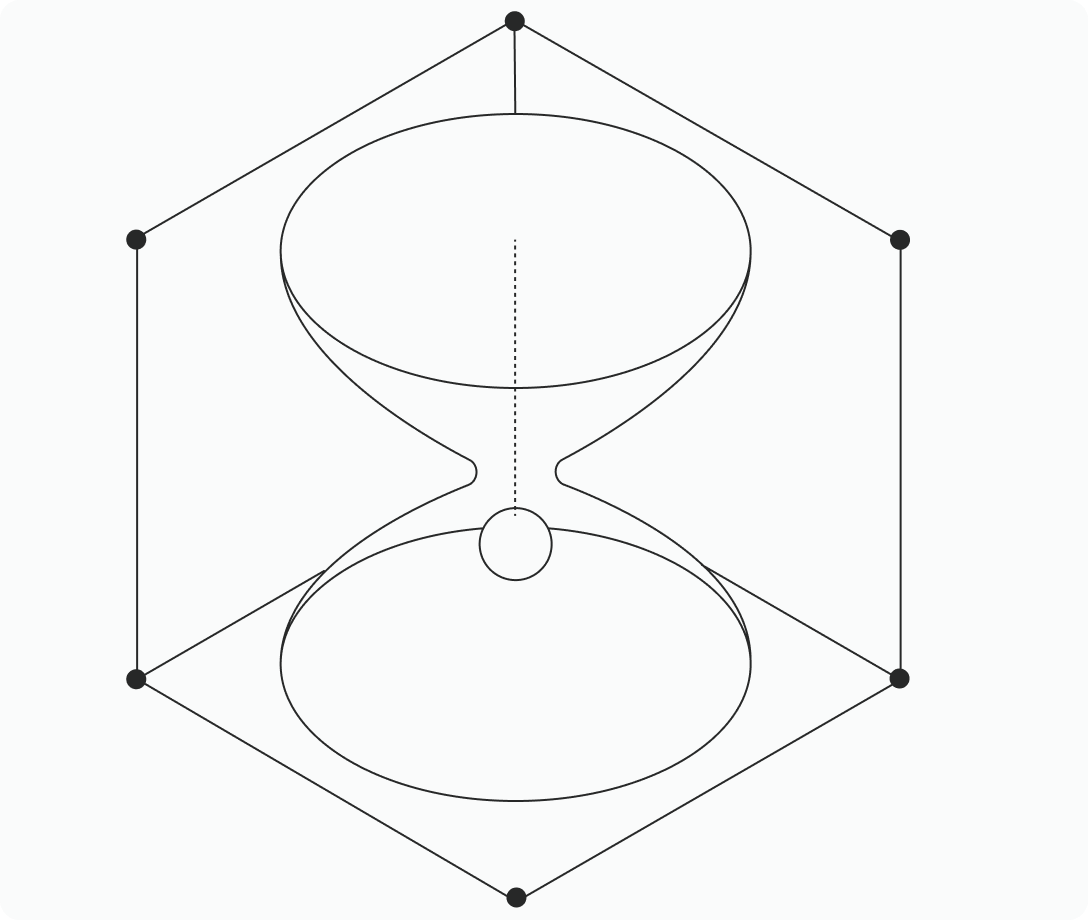
Multiplying Mirrors

ButterflyHot off the press-Multiplying Mirrors from Sheryl Mercier our NSTA President Karen Ostlund. (copyright S & K Associates)

Multiplying Mirrors (PDF)

Become a Member


or download the registration form!

With support by...

SylvanDell
(Click to visit their site!)

Award Opportunities

CESI offers several wonderful award opportunities, apply today!

Presidential Award

Sylvan Dell Award

Mary McCurdy International Award

Muriel Green Award

We had a Successful 2013 NSTA National Conference!

  • Email

NSTA San Antonio, 2013

The Results are In!

  • Email

CESI Is delighted to announce that Dr. James T. McDonald has officially been voted in as President-Elect for 2013-14. He is highly qualified and excited about the opportunity to serve. 

Also, CESI would like to welcome the newest members of the Board of Directors (for the 2013-2015 term): Dr. Ratna Narayan and Dr. Cynthia Deaton!

December 2012 Newsletter

  • Email

Newsletter-Dec2012


CESI Newsletter for December 2012

Volume 14, Issue 2

Attachments:
Download this file (CESI_Newsletter_December 2012.pdf)CESI_Newsletter_December 2012.pdf3306 Kb

Making a Science Foundation Elementary

  • Email

From NSTA Reports, January 2012 - Vol 23 No. 5

By Judy McKee

“You just gave me goose bumps! I do think the story needs to be told. Almost anyone can tell you who his or her elementary teachers were. And they will remember the moment they discovered they were ‘doing’ science,” commented Barbara Tharp, president of the Council for Elementary Science International (CESI), NSTA’s elementary affiliate, after hearing former early-elementary teacher recount how students have thanked her for making science an exciting linchpin to their classroom achievement.

During a keynote speech at a recent Illinois Science Teachers Association conference, National Geographic’s Brady Barr, PhD, choked up as he recalled several elementary school teachers who nurtured his scientific interests and sense of wonder. He claimed to be an average student growing up in middle America, far from the exotic expeditions he would undertake to search for the most unique reptiles in the world. None of his teachers could have predicted he would be the first scientist ever to capture and study all 23 species of crocodilians in the wild. Simple things – like being in charge of the second-grade aquarium and studying biodiversity in a classroom rain forest in fifth grade – piqued his interest and inspired him to pursue his dreams and aspirations.

Though many of us will not know if former students reach Barr’s level of achievement, we do know the intrinsic rewards of opening a child’s eyes to how the world works. Young children have a natural sense of curiosity. They deserve excellent science experiences guided by teachers who can lead them from curiosity to understanding.

A former elementary science lab teacher reports, “Many challenged students bloomed as they worked on real problems in the varied open-ended situations science provides.” She remembers a struggling learner who proudly discovered a real talent for gently picking up crayfish, garnering well-deserved credit from classmates during a pond study. Another boy experiencing learning and emotional difficulties was overjoyed to receive an answer from his hero, Stephen Hawking, after being encouraged by his teacher to write to him.

One NSTA retiree explained, “Working with kids on a science concept, engaging them in experiences, knowing what to do and say to get them to one of those ‘aha’ moments was just the best. Honestly, remembering those times with children is enough to bring tears to my eyes, and it is what brought me the greatest joy and satisfaction.”

Science taught well in elementary school establishes the foundation for middle and high school teachers to achieve their goals. If they have to start from scratch, those teachers cannot be expected to prepare students to be well-informed citizens or to participate effectively in an increasingly scientific and technological world.

Children do not forget their outstanding teachers. At the end of the year, one first grader recalled his teacher fondly. “She was awesome. She taught us all about the world and space. And speaking of space, I think she is the best teacher in the universe!”

Barbara Tharp encourages elementary teachers, telling them, “Whether it is turning celery leaves red or blue, blowing up a ‘volcano,’ or counting the legs on a bug with children, elementary teachers leave a lasting impression – hopefully a positive one! Teachers need to be reminded that they are pivotal in the lives of young children. They set the stage for inquiry from the little ‘whys’ to the inventions of the future. As president of CESI, I hope to encourage more elementary science teachers to the set the tone for science.”

Promoting Excellence and Equity in K-8 Science Education

The Council for Elementary Science International (CESI) is an international professional organization for elementary and middle school educators, and pre-service teachers who will become Pre-K - 8th grade teachers who have the responsibility to teach science to children. The mission of CESI is to promote excellence and equity in K-8 science education. The purposes of the Council for Elementary Science International, according to the CESI Constitution, are ". . . to stimulate, improve, and coordinate science teaching at preschool and elementary school levels and to engage in any and all activities in furtherance thereof; to promote the improvement of science progress which begins in preschool and develops in continuous and integrated fashion through grade 12 and beyond." CESI membership includes a professional journal, newsletters, and opportunities to learn and collaborate with colleagues at breakfasts, luncheons, make and take sessions, workshops and presentations, and mini conferences usually held at national and regional NSTA conventions. CESI is the elementary affiliate of the National Science Teachers Association.


Founded in 1920, the Council for Elementary Science International (CESI) is one of the oldest science-oriented organizations in the nation. The purpose of CESI is to promote excellence in the teaching of science in preschool through middle school classrooms. CESI has approximately 1,200 members, two organizational affiliates, and two states which share joint membership. Members of the organization include classroom teachers, resource teachers, specialists, principals, researchers, and college and university science instructors (methods and content area).

Council for Elementary Science International, 2013